How our fees work.
We believe fees should be simple, transparent, and never come as a surprise.
This page explains how Tallee works, when we earn a fee, and how you can decide whether using our service - or handling a complaint yourself - is the right choice for you.
What's free and what's not
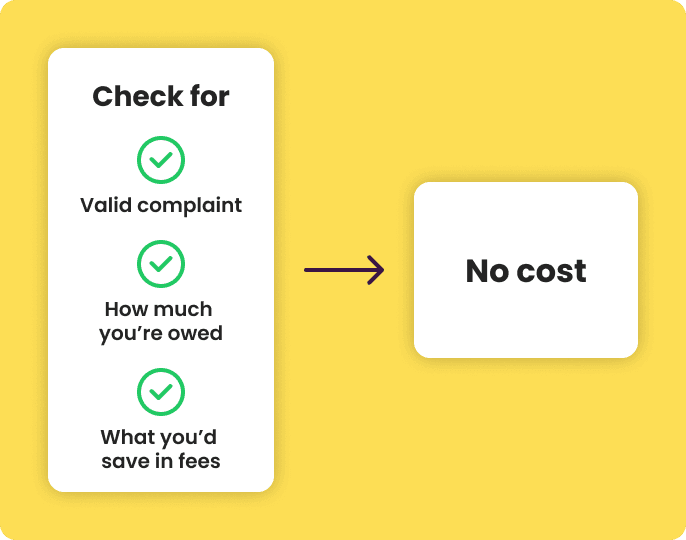 Step 1 - Free
Know what you could be owed
Before you decide whether to make a complaint, it helps to understand what difference winning could actually make.
With Tallee, you can get a clear, personalised estimate showing:
 Whether you’re likely to have a valid complaint
- How much money you could potentially get back
- What you could save in overdraft fees
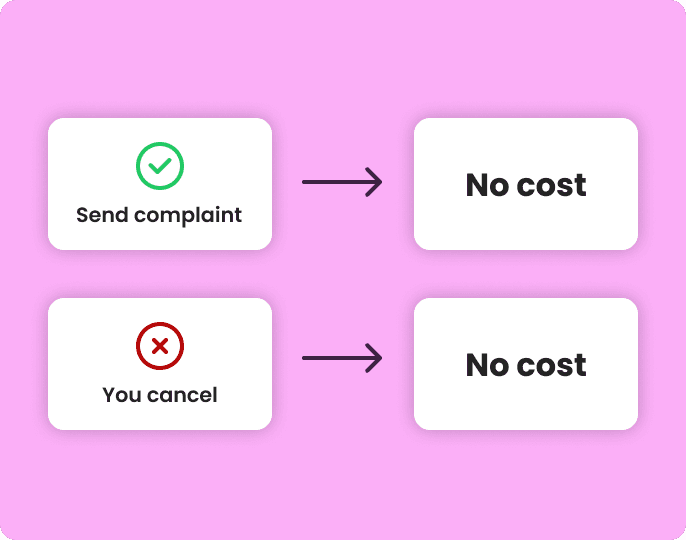 Step 2 - Free
Decide whether to send a complaint
After seeing your estimate, the choice is yours. You decide whether you want us to send the complaint on your behalf, or stop there.
 You won’t be charged for going ahead
- You won’t be charged if you decide not to
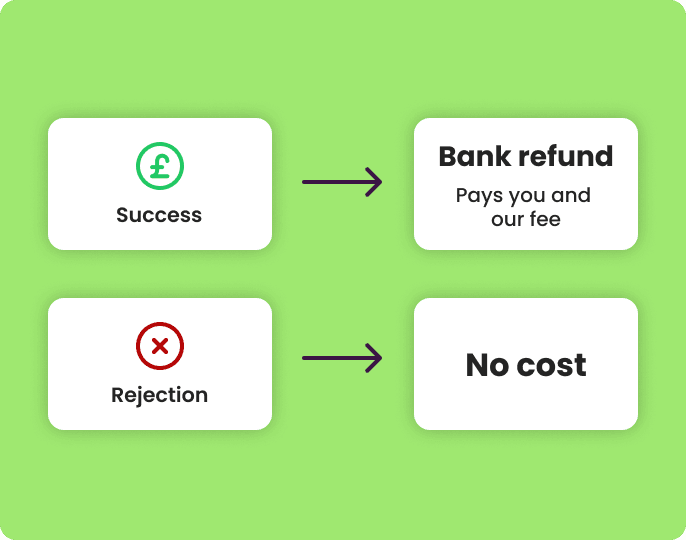 Step 3 - Fee only if you win
Getting an outcome
We only earn a fee if your complaint is successful. If your complaint isn’t successful, there’s nothing to pay out. When a lender offers compensation, our fee is a maximum of 36% (including VAT) of the total amount awarded.
After our fee is taken, the remaining amount benefits you:
 it’s first used to reduce or clear any overdraft balance
- if you’re no longer overdrawn, it’s paid to you as cash

Never Out Of Pocket Guarantee
We believe using Tallee should never put you at risk financially. That’s why we’ve built our fees - and our product - around one simple promise: you’re never out of pocket. Here’s what that means in practice:
Free to check - always
It’s always free to use Tallee to see whether you’re likely to be owed a refund and how much we think you could get back. No payment details, no commitment.
We only earn if you win
We only charge a fee if your complaint is successful.
Your compensation reduces your overdraft first
After our fee is taken, any money you receive is intended to reduce or clear your overdraft, or - if you’re no longer overdrawn - to be paid to you as cash.
The Interest freeze
A successful outcome doesn't just reduce your debt - it stops the "interest trap" for good. At a typical 40% rate, a £1,000 overdraft costs you £336 a year in interest alone!
No hidden fees or nasty surprises
There are no hidden charges, no hourly fees, and no unexpected costs added by us - even if you cancel your complaint.
The only situation where you might ever be asked to cover a cost is a very rare and specific one…
If your bank unfairly rejects your complaint and we've escalated it to the Financial Ombudsman Service on your behalf (as part of the service you agree to this), and you later choose to ask them to stop investigating after they’ve begun work. In that unlikely event, we would only pass on the fixed costs charged to us by the Financial Ombudsman.
We’re open about this because transparency matters to us - and because it reflects real, unavoidable third-party costs, not a fee we add or profit from.
Fee scenarios
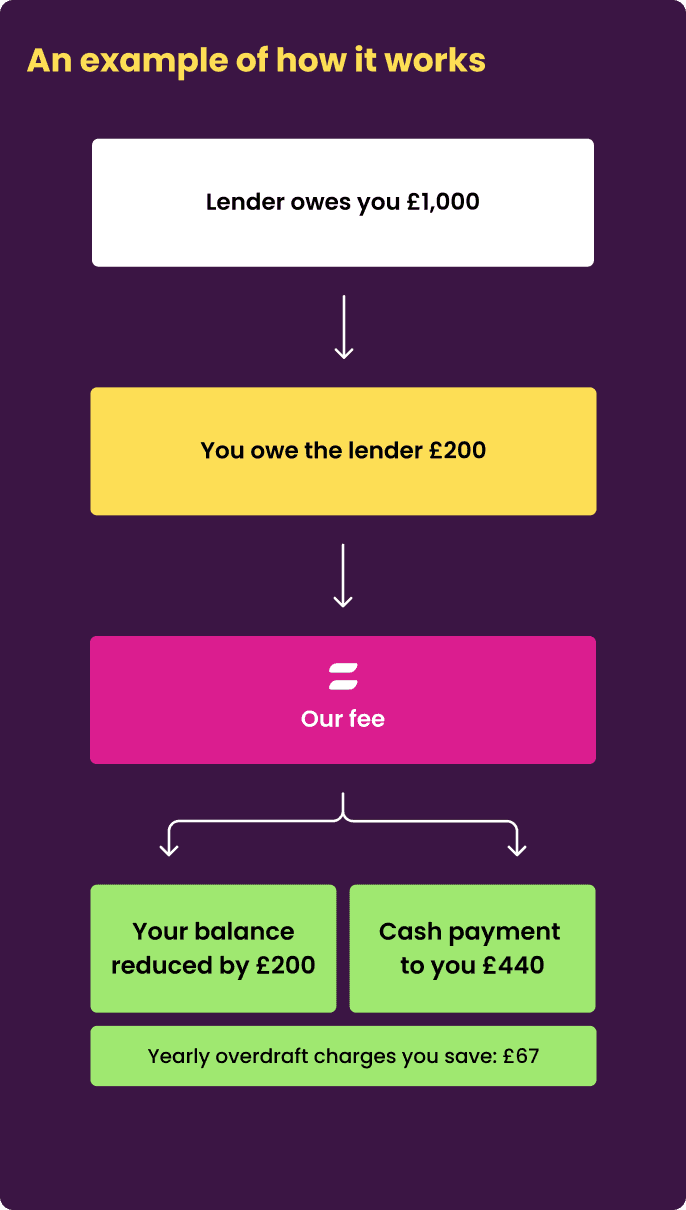
Scenario One
You receive an offer of £1,000 from your lender and have no balance outstanding with them:
- Balance reduction: £0 (your account is already clear)
- Cash payment: £640 paid directly to you as a cash lump sum (after our £360 fee is settled)
Scenario Two
You receive an offer of £1,000 from your lender but have an outstanding balance of £200 with them:
- Balance reduction: £200 (your balance is instantly cleared)
- Cash payment: £440 paid directly to you
You also save approximately £67 a year in future interest charges.
Scenario Three
You receive an offer of £1,000 from your lender, but have an outstanding balance of £1,000 with them:
- Balance reduction: £640 (your balance is instantly slashed to £360)
- Cash payment: £0 (all funds used to aggressively reduce your debt)
You also save approximately £255 a year in future interest charges.
Good to know: Sometimes the lender might pay you the whole offer amount directly, including our fee. In that case, we will send you a link to pay us our share.
Charging Table
Our scenarios include the maximum fee of 36%, but this can be lower depending on your offer amount.
| Band | Total Compensation Received | Maximum % rate of charge (Inc VAT) | Maximum total fee (Inc VAT) |
|---|---|---|---|
| 1 | £1 - £1,499 | 36% | £504.00 |
| 2 | £1,500 - £9,999 | 33.60% | £3,000.00 |
| 3 | £10,000 - £24,999 | 30% | £6,000.00 |
| 4 | £25,000 - £49,999 | 24% | £9,000.00 |
| 5 | £50,000 or above | 18% | £12,000.00 |
The standardised figures used above are for cost illustrations only and are not to be taken as an estimate of the amount likely to be recovered for you. The fee you will have to pay will be based on your compensation award which will vary based on the amount you borrowed, length of time and overall cost of the lending. This means what you pay might be more or less than the illustrations shown above.
Using Tallee vs going it alone
You do not need to use Tallee to complain to your lender.
It’s free to complain directly to financial companies if you believe you’ve lost money due to a mis-sold financial product. You can make a complaint yourself, and if your lender rejects it, you can still take the matter to the Financial Ombudsman Service.
If you’re unsure how to make a complaint, you can also get free, impartial advice from consumer organisations.
If your only goal is to keep 100% of the money, doing it yourself is the way to go. But before you start digging through six years of statements, here’s why people partner with us...
What Tallee offers that’s different
Find out what you could be owed in minutes
In just a few taps, we analyse your account to show whether you’re likely to have a valid complaint and what it could be worth, so you can see a clear estimate before deciding what to do next.
We focus on strong complaints, not speculative ones
If you choose to proceed, we submit a well-founded complaint built from detailed analysis of your account and what’s considered fair and reasonable in overdraft mismanagement cases.
We challenge banks when they say no unfairly
Banks sometimes reject complaints they shouldn’t. When that happens, we review the decision carefully and continue the complaint where the case supports it.
We handle the back-and-forth with the bank, guide you throughout, and - where appropriate - take the complaint to the Financial Ombudsman Service on your behalf. This is done end to end, with your permission and without requiring extra effort from you.